Albania - A Journey through
Millennia.
Experience Unique Sites of
History
4 - 14 November 2025
The trip took place in the first half of November 2025. With only eight fellow travellers, it was a very pleasant small group trip. Based on the small but well-connected agency responsible for this trip, one of the group's strengths, along with its guides (one German and one Albanian), was its ability to change plans at short notice if necessary and, for example, to flexibly reschedule programme dates if needed so that nothing had to be cancelled due to darkness or closures.
Although we were somewhat sceptical about the weather at this late stage of the year, we were quickly proven wrong. Except for the trip to the north-east towards North Macedonia, where we had three days of bad weather (including rain), we enjoyed very pleasant temperatures of up to 20 °C and sunshine at the beginning and end of the trip.
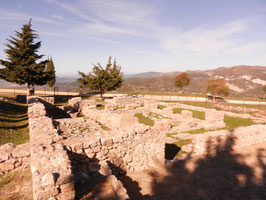
The trip had a rigorous programme with many stops and sights. Archaeological sites such as Byllis and Apollonia, set against a magnificent mountain backdrop in a beautiful natural location, were the absolute highlights of this largely archaeologically oriented trip. And there were quite a few highlights to look forward to (e.g. Butrint and Antigoneia).
Another highlight was definitely the visit to the royal rock tombs of Selca e Poshtme, which cannot be found in other travel programmes and require a somewhat adventurous journey to reach, but which the local driver mastered excellently, as always. There were also several fortresses with ancient cores and newer masonry, which – although perhaps less exciting in terms of architecture – once again offered magnificent panoramic views of the surrounding countryside.
In addition to ancient sites, there were also medieval to modern sacred buildings of various denominations, some with breathtaking frescoes. As previously announced, some of the museums were closed. The world's largest museum of icons in Korça (added to the programme) was also extremely interesting. However, the old Archaeological Museum in Tirana, with the cream of Albanian finds, was a sad remnant of a bygone era in terms of display cases, lighting, signage, labelling and presentation/explanation, as well as the complete lack of museum didactics – apart from the finds themselves, of course. However, it is to be completely rebuilt and refurbished in the coming years.
But a tour of Tirana's modern centre and government district with its interesting architecture also had its charm. The huge, modern pyramid-shaped mausoleum in the middle of the city, designed by his daughter for the then dictator Enver Hoxha, caused amazement and head-shaking. Incidentally, it was never used for its intended purpose.
Another definite plus point was the culinary delights on offer, which were included in the price. Local Albanian cuisine was served in various locations, with a variety of delicious starters followed by meat or fish dishes and desserts. Absolutely unrivalled was a slow food meal at a vineyard with pumpkin cultivation and goose breeding. What was served there in various starters, main courses and desserts, with the option of accompanying wine or other beverages, as one of two additional lunches in a pleasant atmosphere, was undoubtedly another absolute highlight of the trip. Here, there was also the option – completely without obligation – to purchase locally produced wines or delicious sausage and cheese specialities (with the latter available to sample!).
The second lunch, featuring wild herb salad, cold pickled dandelion greens, nettle and cheese dumplings, freshly kneaded goat's cheese from a goatskin bag, a lamb dish with rice and an aubergine-based dessert with a truly alternative touch, also impressed with its uniqueness – you don't get served something like that every day!
The tour guide proved to be competent and knowledgeable. The local guide in particular, a second-generation archaeologist, impressed with his extensive and sometimes even insider information. He had been involved in excavations for many years and proved to be a fountain of knowledge about the history, land and people of Albania. His very friendly and always helpful willingness to provide information about his country or to help travellers with minor ‘problems’ was a joy. Where other tour groups were sometimes faced with closed doors, our guide was often able to help thanks to his good contacts.
The hotels where the tour group stayed were all of a good standard and usually provided a sumptuous breakfast in the morning, for which enough time was always allowed – not unimportant, because a study trip is also a holiday!
Conclusion: The trip was very worthwhile – and Albania, with its varied landscape and rich history, is (more than) worth a visit.
Dr. Andreas Selent, Salzgitter