Durrës
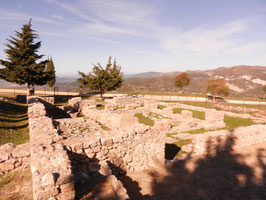
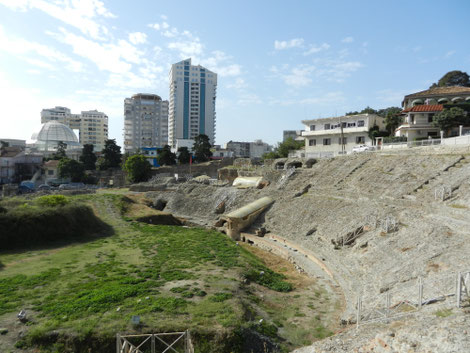
In der Hafenstadt pulsiert das Leben, wie schon seit vielen Jahrhunder-ten. Das zeigt sich auch an verschiedenen Denkmälern aus unterschied-lichen Epochen. Bei einem Rundgang
begegnen uns etwa aus dem Mittelalter der Venezianische Turm oder die alte, aus der Spätantike stammende, Stadtmauer. Der Höhepunkt ist aber das teilweise ausge-grabene Amphitheater, das
einst für etwa 16.000 Zuschauer Platz bot. Ein Wandel in der Nutzung spiegelt sich in einer kleinen Kapelle. Nicht zu übersehen ist das „römische Forum“. Auch das Archäologische Museum gehört zu
den Höhepunkten in der Stadt, das gerade saniert und erweitert wird. Im Herbst soll es wiedereröffnet werden.
Life in the port city pulsates as it has done for many centuries. This is also evident in various monuments from different eras. On a tour, we encounter the Venetian Tower from the Middle Ages and the old city wall dating back to late antiquity. The highlight, however, is the partially excavated amphitheatre, which once seated around 16,000 spectators. A small chapel reflects a change in use. The ‘Roman Forum’ is not to be overlooked. The Archaeological Museum, which is currently being renovated and expanded, is also one of the city's highlights. It is scheduled to reopen in autumn.

Berat
(UNESCO Welterbe | UNESCO World Heritage Site)
Berat ist eine Kleinstadt am Oberlauf des Osum, der die Stadt teilt. In der Altstadt mit ihren engen Gassen finden sich Wohnhäuser, Moscheen und Reste eines Palastes aus osmanischer Zeit, dessen Reste in der kommunistischen Diktatur abgetragen oder überbaut wurde. Vor wenigen Jahren wurde die Überbauung abgeräumt und der Platz gestaltet. Die Burganlage, von der aus man einen phantastischen Blick auf die Stadt hat, wurde mehr als 2000 Jahren genutzt. Sie stellt heute eine Ausnahme dar, weil hier nicht nur die historische Innenbebauung erhalten ist, sondern auch noch bewohnt wird.
Berat is a small town on the upper reaches of the Osum River, which divides the town. The old town with its narrow streets is home to residential buildings, mosques and the remains of a palace from the Ottoman period, which was demolished or built over during the communist dictatorship. A few years ago, the buildings were cleared away and the square was redesigned. The castle complex, which offers a fantastic view of the town, was used for more than 2,000 years. Today, it is exceptional because not only has the historic interior been preserved, but it is also still inhabited.Berat
Ardenica
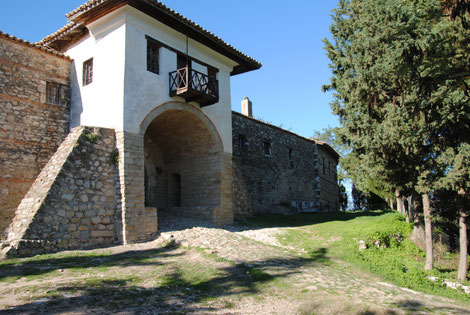
Das etwas abgelegene Kloster in Ardenica bietet dem Besucher einen großartigen Blick in die Landschaft, allein dies rechtfertigt fast schon den Besuch. Aber das ist natürlich zu kurz gegriffen. Das Kloster ist ein be-deutender Schauplatz der albanischen Geschichte, weil es in enger Verbindung zu Skanderbeg steht. Der Klosterkomplex insgesamt ist hochinteressant, besonders aber die Kirche, die der Geburt der Hl. Maria gewidmet ist, mit großartigen Fresken aus dem 18. Jahrhundert. Nach der Auflösung des Klosters in kommunistischer Zeit ist es heute wieder ein Kloster.
The somewhat remote monastery in Ardenica offers visitors a magnificent view of the landscape, which alone almost justifies a visit. But that would be an understatement, of course. The monastery is an important site in Albanian history because of its close connection to Skanderbeg. The monastery complex as a whole is extremely interesting, but the church dedicated to the birth of St. Mary, with its magnificent 18th-century frescoes, is particularly noteworthy. After being dissolved during the communist era, it is now a monastery once again.

Apollonia
(Archäologischer Park | Archaeological Park)
Apollonia ist ein großartiger archäologischer Park, der nur darauf wartet, als Weltkulturerbe anerkannt zu werden – das Verfahren ist zumindest schon eingeleitet. Die Stadt, schon im 6. Jahrhundert v. Chr. gegründet, erlebte ihre Blüte in der römischen Kaiserzeit. Dies spiegelt sich auch in den Ausgrabungen wider. Am Eingang zum Park liegt das Marien-Kloster. Kloster und Kirche stellen ein wichtiges und beeindruckendes Zeugnis mittelalterlicher Architektur in Albanien dar. Hier findet sich auch das archäologische Museum mit Funden von der Antike bis zum Mittelalter.
Apollonia is a magnificent archaeological park that is just waiting to be recognised as a World Heritage Site – the process has at least already been initiated. Founded in the 6th century BC, the city flourished during the Roman Empire. This is also reflected in the excavations. The Monastery of St Mary is located at the entrance to the park. The monastery and church are an important and impressive example of medieval architecture in Albania. The archaeological museum is also located here, with finds from antiquity to the Middle Ages.
Kaninë
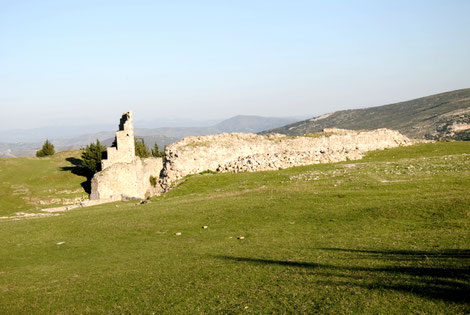
Die Burgruine ist ein wichtiges und eindrucksvolles Zeugnis zur Ge-schichte Albaniens. Im 4. Jahrhundert v. Chr. entstand eine Befestigung, die im Laufe der Zeit immer wieder verändert wurde. Noch im 17. Jahr-hundert war sie in einem guten Zustand, verfiel dann aber.
The castle ruins are an important and impressive testament to Albania's history. A fortification was built here in the 4th century BC, which under-went numerous alterations over time. It was still in good condition in the 17th century, but then fell into disrepair.
Byllis
(Archäologischer Park | Archaeological Park)
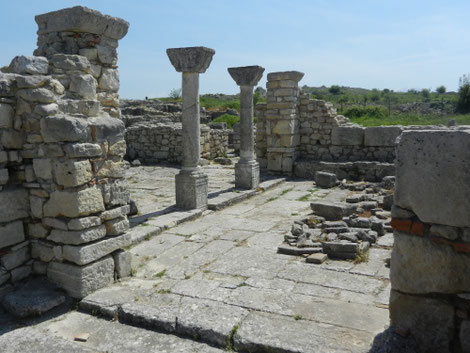
Der große archäologische Park zeigt auf dem bisher ausgegrabenen Areal die Entwicklung der Stadt von ihren Anfängen bis zum Nieder-gang. Tempel, Theater, Verwaltungs- und Wohngebäude vermitteln einen entsprechenden Eindruck. Die Kirchenbauten aus der Spätantike zeichnen sich durch ihre großartigen Mosaikböden aus.
The large archaeological park shows the development of the city from its beginnings to its decline on the area excavated so far. Temples, theatres, administrative and residential buildings convey a corre-sponding impression. The church buildings from late antiquity are characterised by their magnificent mosaic floors.
Vlorë
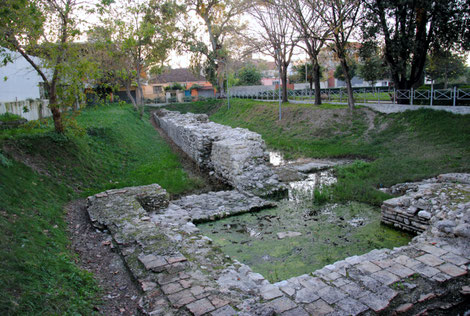
Vlorë ist nach Durrës die zweitgrößte Hafenstadt Albaniens. Im 19. Jahrhundert entwickelte sich die Stadt zum Zentrum einer albanischen Identität. Zahlreiche Denkmäler erinnern an die albanische Unabhängig-keit im Jahre 1912. Heute ist das Stadt-bild italienisch geprägt, Reste der antiken Stadt Aulon sind zu sehen.
Vlorë is Albania's second largest port city after Durrës. In the 19th century, the city developed into the centre of Albanian identity. Nume-rous monuments commemorate Albanian independence in 1912. Today, the cityscape is Italian in character, and remnants of the ancient city of Aulon can be seen.

Orikum
(Archäologischer Park | Archaeological Park)
Orikum zählt zu den archäologischen Parks Albaniens. Es nimmt aber eine Sonderstellung ein, weil die Ausgrabungsstätte auf dem Gelände einer NATO-Basis liegt. Jedoch taucht man in eine Idylle ein, die man nicht erwartet hätte. Zu den großen Ereignissen, die sich mit dem Ort verbinden lassen, zählt eine Schlacht zwischen den Truppen Caesars und denen des Pompeius, die Caesar zwar verlor, letztendlich aber den Krieg gewann.
Orikum is one of Albania's archaeological parks. However, it occupies a special position because the excavation site is located on the grounds of a NATO base. Nevertheless, visitors are immersed in an idyllic setting that they would not have expected. One of the major events associated with the site is a battle between Caesar's troops and those of Pompey, which Caesar lost but ultimately won the war.
Himarë
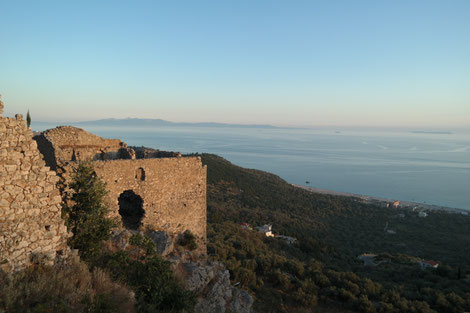
Himarë ist eine zweigeteilte Stadt mit einem modernen Tei, der uns weniger interessiert, sowie die Altstadt mit ihrer Festung und dem Bergdorf. Mit seinem historischen Stadtbild spiegelt der Ort die Ge-schichte Albaniens wider. Hier bewahrten die Einwohner ihren ortho-doxen Glauben in einem zunehmend osmanisch geprägten Umland.
Himarë is a town divided into two parts: a modern section, which is of less interest to us, and the old town with its fortress and mountain village. With its historic townscape, the place reflects the history of Albania. Here, the inhabitants preserved their Orthodox faith in an increasingly Ottoman-influenced surrounding area.
(Telemak GOGA - https://commons.wikimedia.org/w/index.php?curid=52183861)

Butrint
(Archäologischer Park – UNESCO Welterbe | Ar-chaeological Park – UNESCO World Heritage Site)
Der Ort ist einer der schönsten Ausgrabungsstätten des Landes. Die wechselhafte Geschichte des Ortes lässt sich anhand der erforschten Bauten vom 6. Jahrhundert v. Chr. bis in die frühe Neuzeit verfolgen. Je nach Jahreszeit sollte der Besucher die Gelegenheit nutzen, die Butrint-Muschel vor Ort zu genießen.
The town is one of the most beautiful archaeological sites in the country. The chequered history of the town can be traced from the 6th century BC to the early modern period on the basis of the buildings that have been discovered. Depending on the time of year, visitors should take the opportunity to savour the Butrint mussel on site.
Sarandë
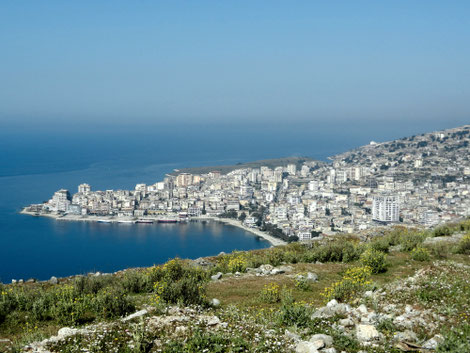
Der Ort ist heute als touristisches Zentrum bekannt. Unter den archäo-logischen Zeugnissen, die in der Stadt zu sehen sind, zählen die frei-gelegten Reste der Stadtmauer und einer Synagoge, ein seltenes Zeug-nis des frühen Judentums in Albanien. Etwas außerhalb der Stadt liegen die Ruinen des Klosters der 40 Heiligen, eines frühen, architektonisch interessanten Pilgerheiligtums. Von dort aus hat man einen phantastischen Blick auf Sarandë.
Today, the town is known as a tourist centre. Among the archaeological remains that can be seen in the town are the excavated remains of the city wall and a synagogue, a rare testimony to early Judaism in Albania. Just outside the town lie the ruins of the Monastery of the 40 Saints, an early pilgrimage site of architectural interest. From there, you can enjoy a fantastic view of Sarandë.
Phoinike
(Archäologischer Park | Archaeological Park)
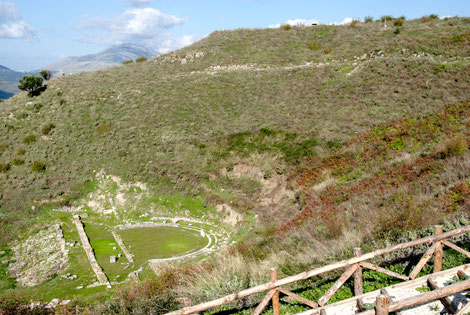
Im weitläufigen Archäologischen Park finden sich Reste von Häusern, Kirchen und Tempeln. Besonders eindrucksvoll sind das riesige antike Theater und große Abschnitte der Stadt-mauer.
The extensive Archaeological Park contains the remains of houses, churches and temples. Particularly impressive are the huge ancient theatre and large sections of the city wall.

Mesopotam
In der bedeutenden Klosteranlage aus dem 13. Jahrhundert zeichnet sich besonders die Kirche mit ihrer gut erhaltenen Wandmalerei aus. Nach einer langen Restaurierungsphase wird sie heute wieder genutzt und kann nach Absprache besichtigt werden.
The church in this important 13th-century monastery complex is particu-larly noteworthy for its well-preserved wall paintings. After a long period of restoration, it is now in use again and can be visited by appointment.
Gjirokastër
(UNESCO Welterbe | UNESCO World Heritage Site)
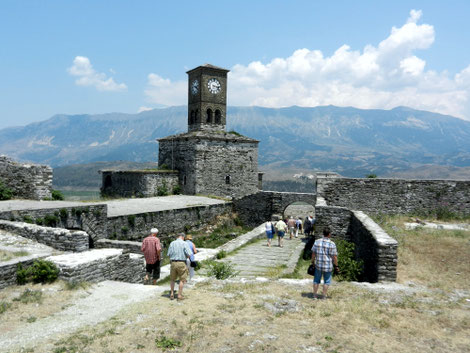
Die Stadt beherbergt osmanische Moscheen und christlich-orthodoxe Kirchen. Innerhalb der Altstadt haben sich Bürgerhäuser im originalen Zustand erhalten. Die eindrucksvolle Burg beherbergt neben einem mili-tärhistorischen Museum typische Architekturzeugnisse aus osmanischer Zeit.
The city is home to Ottoman mosques and Christian Orthodox churches. Within the old town, town houses have been preserved in their original condition. The impressive castle houses a military history museum as well as typical architectural examples from the Ottoman
Antigonea
(Archäologischer Park | Archaeological Park)
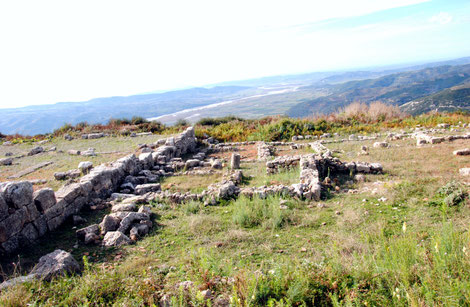
Das großräumige Areal ist noch lange nicht erforscht. Bislang freigelegt wurden Reste der Akropolis, die vier Kilometer lange Stadtmauer, die Agora, verschiedene Basiliken und einige repräsentative Wohnhäuser.
The extensive area is still far from being explored. So far, remains of the acropolis, the four-kilometre-long city wall, the agora, various basilicas and some representative residential buildings have been uncovered.

Kamenicë
Unter den zahlreichen archäologischen Stätten Albaniens findet sich eine bedeutende Ausgrabung in Kamenicë. Sie führt in die Frühge-schichte des Landes. Hier sehen wir Ergebnisse der Ausgrabungen, die zwischen 2000 – 2007 erfolgten: die Reste des größten Tumulus in Südosteuropa, der vom 23. bis zum 7. Jahrhundert v. Chr. belegt wurde. Die Funde befinden sich in den Magazinen des Archäologischen Museums in Tirana. Im Archäologischen Museum in Korçë sind einige Funde als Repliken ausgestellt, ebenso in einer kleinen Ausstellung auf dem Grabungsgelände.
Among Albania's numerous archaeological sites, there is an important excavation in Kamenicë. It takes us back to the country's early history. Here we see the results of excavations carried out between 2000 and 2007: the remains of the largest tumulus in South-Eastern Europe, which was occupied from the 23rd to the 7th century BC. The finds are housed in the storerooms of the Archaeological Museum in Tirana. Some of the finds are on display as replicas in the Archaeological Museum in Korçë, as well as in a small exhibition at the excavation site.
(Pasztilla aka Attila Terbócs - Own work https://creativecommons.org/licenses/by-sa/4.0) https://creativecommons.org/licenses/by-sa/4.0)
Korçë
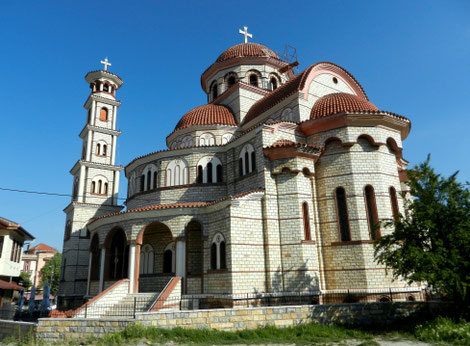
Korçë ist für Albanienreisende vor allem durch sein Bier gleichen Namens bekannt. Aber das wäre eine Verkürzung. Das Stadtbild spiegelt die wechselhafte Geschichte des Ortes wider. Weil die Stadt auf einer Hochebene liegt, gibt es hier im Winter sogar Schnee, der auch zum Skilaufen einlädt. Unter den Museen der Stadt findet sich das Nationalmuseum für mittelalterliche Kunst, das wir besuchen werden. Besser be-kannt ist es unter dem Namen Ikonenmuseum. Es gilt als größtes Ikonenmuseum weltweit; natürlich kann man nicht alles ausstellen.
Korçë is best known to travellers to Albania for its beer of the same name. But that would be an oversimplification. The cityscape reflects the eventful history of the place. Because the city is located on a plateau, there is even snow here in winter, which is also ideal for skiing. Among the city's museums is the National Museum of Medieval Art, which we will visit. It is better known as the Icon Museum. It is considered the largest icon museum in the world; of course, not everything can be exhibited.
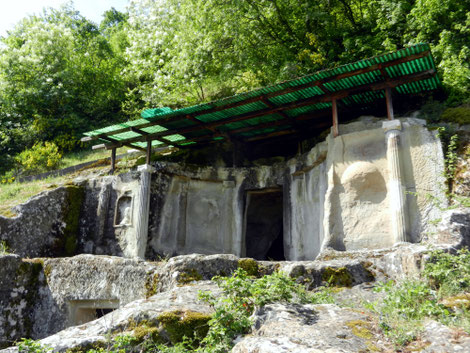
Selce e Poshtmë
Hier handelt es sich um einen Platz mit außerordentlichen Zeugnissen illyrischer Geschichte. Fünf reich geschmückte Gräber aus der Zeit vom 4. bis 3. Jahrhundert v. Chr. – in den Felsen eingearbeitet – werden allgemein als Königsgräber angesprochen.
This is a place with extraordinary evidence of Illyrian history. Five richly decorated tombs from the 4th to 3rd centuries BC – carved into the rock – are generally referred to as royal tombs.
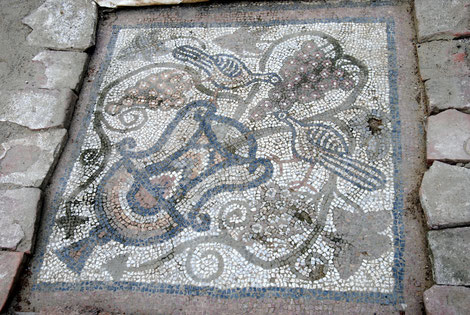
Lin
Das Dörfchen Lin liegt an einer kleinen Bucht des Ohrid-Sees. Die frühesten Siedlungsspuren reichen bis in die Eisenzeit zurück, von denen aber nichts zu sehen ist. Unser Besuch gilt der Ausgrabung einer spätantiken Basilika, die vielleicht zur Sommerresidenz des Bischofs von Ohrid gehörte. Der Weg dorthin führt durch idyllische Gassen mit kleinen Steinhäusern.
The village of Lin is located on a small bay of Lake Ohrid. The earliest traces of settlement date back to the Iron Age, but nothing remains to be seen. Our visit is to the excavation site of a late antique basilica, which may have belonged to the summer residence of the Bishop of Ohrid. The path there leads through idyllic alleys with small stone houses.
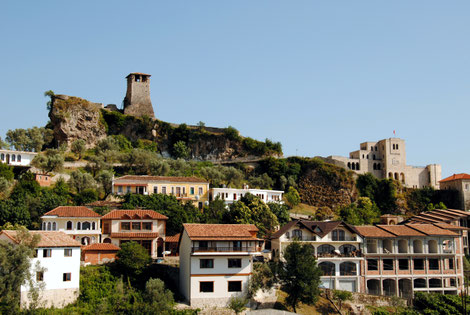
Krujë
Alles dominierend ist die große Festung, die eng mit Skanderbeg verbunden ist. Innerhalb der Mauern befinden sich zwei Museen, ein Türkisches Bad und ein kleines „Kloster“ des Bektaschi-Ordens. Unter-halb des Burghügels liegt eine restaurierte Basarstraße des 19. Jahrhunderts mit ihren kleinen Geschäften.
The large fortress, closely associated with Skanderbeg, dominates the town. Within its walls are two museums, a Turkish bath and a small ‘monastery’ of the Bektashi Order. Below the castle hill lies a restored 19th-century bazaar street with its small shops.
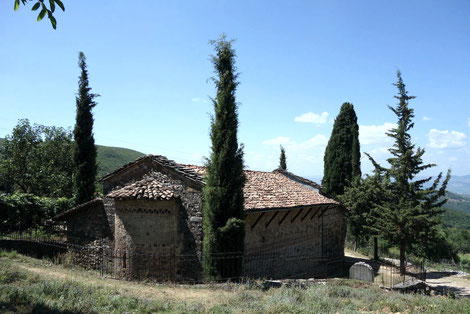
Shelcan
Der kleine, etwas abgelegene Ort überrascht mit einem kunst-historischen Kleinod: die Nikolauskirche. Sie gilt als eine der sehenswertesten Kirchen des Landes. Dabei spielt ihre Größe keine Rolle, vielmehr ihre Ausstattung. Die Malereien stammen von Onufri, Vater und Sohn, den bedeutendsten Kirchenmalern Albaniens im 16. Jahrhundert.
This small, somewhat remote village surprises visitors with an art-historical gem: St. Nicholas Church. It is considered one of the most beautiful churches in the country. Its size is not what makes it special, but rather its interior decoration. The paintings are by Onufri, father and son, the most important church painters in Albania in the 16th century.
(C) Malenki - Own Work | CCBY-SA 4.0)
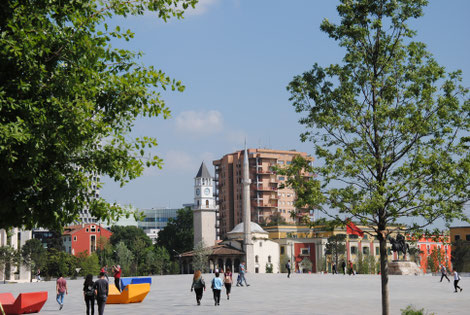
Tirana
Die Hauptstadt Albaniens ist die größte Stadt des Landes. Den Besucher erwartet eine lebhafte, spannende Metropole, in der Zeugnisse der Ver-gangenheit auf die Moderne treffen. In Tirana findet sich eine reiche Museumslandschaft. Besonders zu erwähnen sind dabei das Historische Nationalmuseum (geschlossen bis 2028) mit seinem monumentalen Fassadenmosaik und das Archäologische Nationalmuseum.
The capital of Albania is the largest city in the country. Visitors can expect a lively, exciting metropolis where traces of the past meet modernity. Tirana has a rich museum scene. Particularly noteworthy are the National History Museum (closed until 2028) with its monumental mosaic façade and the National Archaeological Museum.
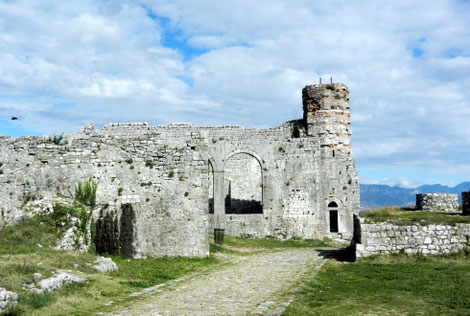
Shkodër
Durch Erdbeben und die systematische Zerstörung durch die Kom-munisten ist vom alten Shkodër nicht mehr viel übrig geblieben. Jedoch spiegelt die mächtige Burg Rozafa mit Kirchen, Moscheen und Wohnge-bäuden die wechselhafte Geschichte des Landes wider. Auch hier trifft man auf den Nationalhelden Skanderbeg.
Due to earthquakes and systematic destruction by the communists, not much remains of old Shkodër. However, the mighty Rozafa Castle, with its churches, mosques and residential buildings, reflects the country's turbulent history. Here, too, one encounters the national hero Skanderbeg.
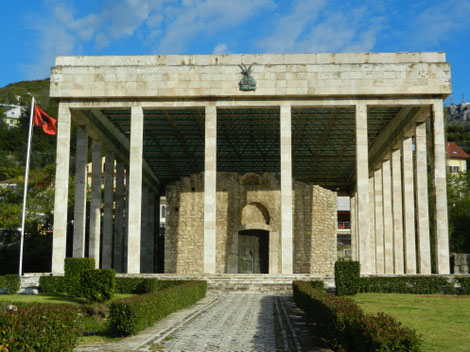
Lezhë
Bereits in der Antike gab es die Stadt. Zeugnisse der frühen Geschichte finden sich in der Unterstadt mit Resten der Stadtbefestigung. Prägnant im Stadtbild ist aber die Skanderbeg-Gedenkstätte, die über der Grabes-kirche des Nationalhelden errichtet wurde. Oberhalb der Stadt liegt die große Burg, von der man einen phantastischen Ausblick bis weit ins Land hinein hat.
The city already existed in ancient times. Evidence of its early history can be found in the lower town, where the remains of the city fortifications can still be seen. However, the most striking feature of the cityscape is the Skanderbeg Memorial, which was built over the tomb of the national hero. Above the city lies the large castle, from which you can enjoy a fantastic view far into the countryside.